For them, humanitarian work is not simply a profession. It is an act of courage, solidarity, responsibility and leadership. Throughout the war, Buthaina, Founder and Executive Director of Wefaq Society for Women and Child Care, and Sahar, the head of the board of trustees of Palestinian Development Women Studies Association (PDWSA), have continued to lead their organisations and support women, children and families despite extraordinary challenges.
Their own lives have been profoundly affected by the war. Yet, even amid displacement, loss and the destruction of their offices and resources, they have continued to show up for their communities, mobilising support, maintaining services and ensuring that humanitarian assistance reaches those who need it most.
This is what their local humanitarian leadership looks like. It means responding to immediate needs while understanding the deeper realities facing communities. It means creating spaces where women can access psychosocial support, protection and economic assistance. It means supporting families struggling to access food and basic necessities. And it means continuing to listen to communities and adapt humanitarian action to what people actually need.
Sahar’s story
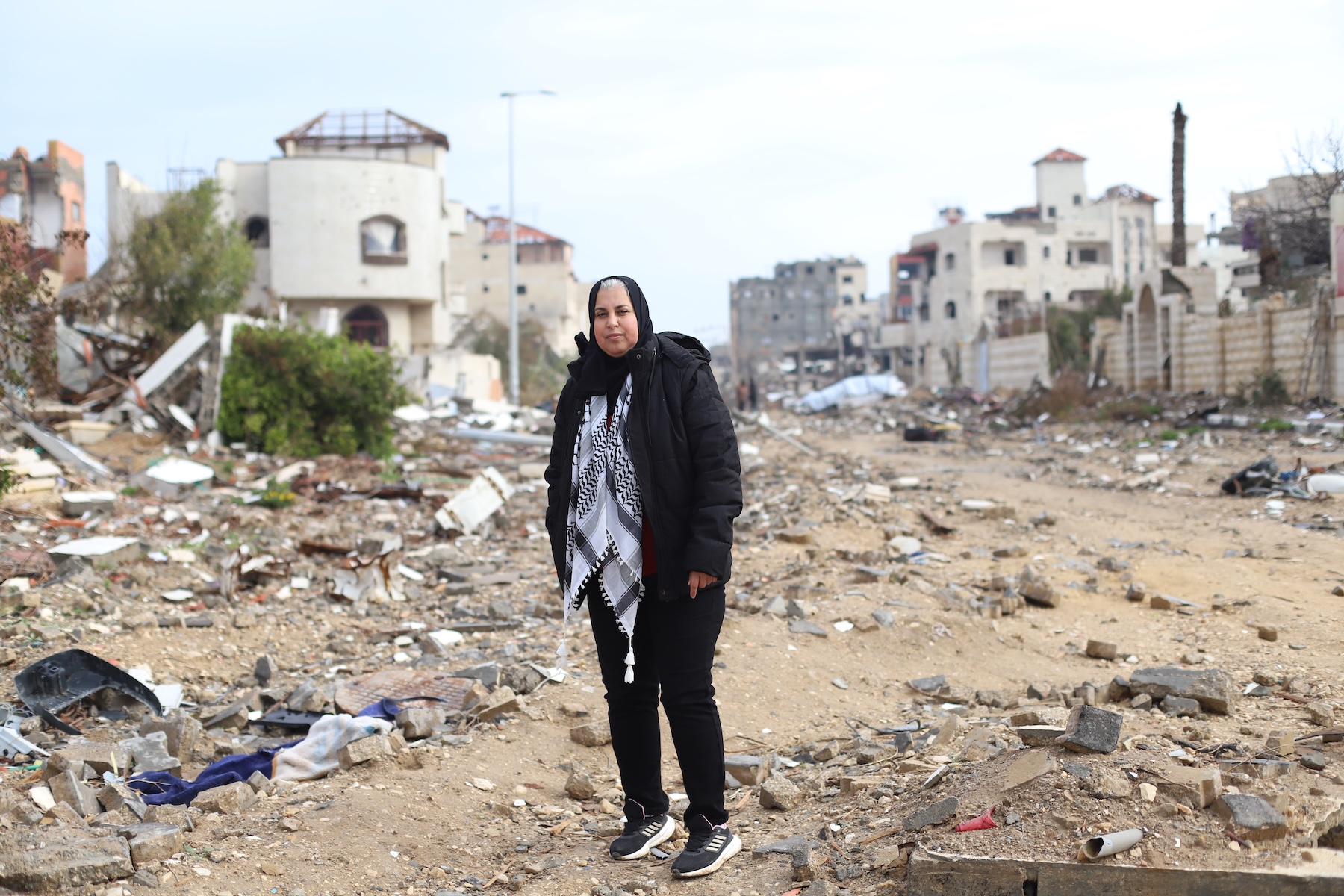
Sahar is a humanitarian worker and head of the Palestinian Development Women Studies Association (PWDSA) – one of ActionAid’s partner organisations in Gaza.
Through PDWSA, Sahar and her colleagues work to strengthen women through economic empowerment, psychosocial support and social empowerment, while also supporting small business initiatives and youth and community initiatives. For Sahar, the humanitarian crisis cannot be separated from the growing vulnerability of women.
Across Gaza, women have faced the destruction of livelihoods, loss of income and increasing responsibility for providing for their families. Many women have become sole providers, while women living in displacement sites and camps continue to face enormous challenges in securing food.
She describes the responsibility of local organisations clearly: “These women are unable to provide food for their families, making it the responsibility of Palestinian organisations to support them and provide essential assistance”. That responsibility is translated into action every day. Sahar and her team have continued delivering assistance to women across Gaza, including food and fresh vegetable parcels supported by ActionAid and other partners.
PDWDSA has also established a camp for displaced families headed by women in Gaza, with the support of ActionAid. Sahar believes in the importance of establishing camps for women in Gaza due to the hard conditions and suffering women pass through. “As a feminist organisation, one of the biggest difficulties we face is providing a humanitarian response for women who have been displaced multiple times,” she said.
“Unfortunately, women need to move places occasionally as not every displacement camp provides basic needs, especially water, which forces women to travel to different displacement camps. Lack of privacy in shelters and displacement camp is one of the most painful suffering of women. Women have almost no privacy in shelters. We do not have safe spaces to talk as women in displacement camps. We are often unable to provide our services to women, as during our working hours women need to stand in long queues for water and hot meals.”
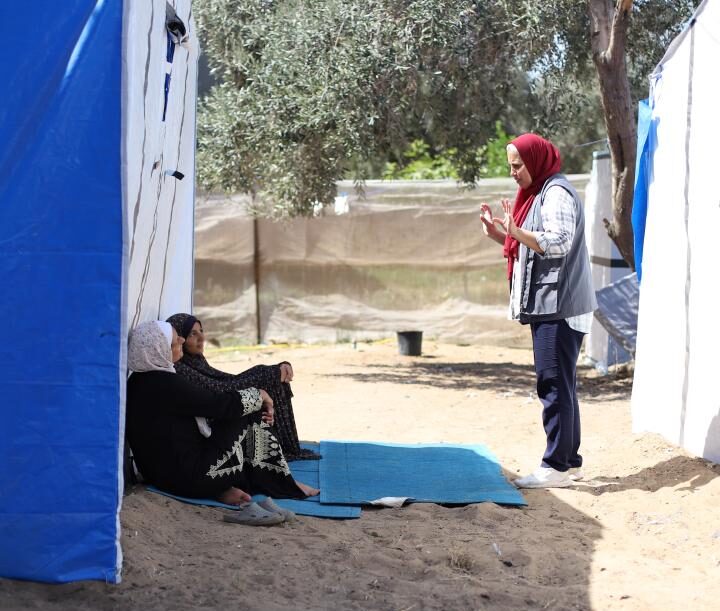
PDWSA has set up displacement camps for women, with the support of ActionAid
Sahar also highlights the importance of women’s leadership for humanitarian response: “Women must be part of the humanitarian response because it is difficult for anyone other than a woman to think like a woman, and it is very difficult for anyone to express women’s need as women because women’s planning and engagement in humanitarian response are necessarily needed to mitigate the sever impacts of crisis and trauma experienced by women.”
“Women must lead and they must be placed in leadership positions so that the humanitarian response could be designed to take into consideration the needs of women, and there must be a feminist voice saying — ‘this thing benefits me, and this thing meets my needs and represents me.’ If there are no women tasked to lead humanitarian response, there will be no one to think as women or know their needs.”
Buthaina’s story
For Buthaina and her team at Wefaq, humanitarian leadership similarly means remaining rooted in the community and continuing to provide support to women and children, including survivors of violence, despite the immense pressures created by the war.
Their leadership demonstrates something fundamental: humanitarian response is strongest when it is led by people who understand the communities they serve, are accountable to them and remain alongside them through the crisis.
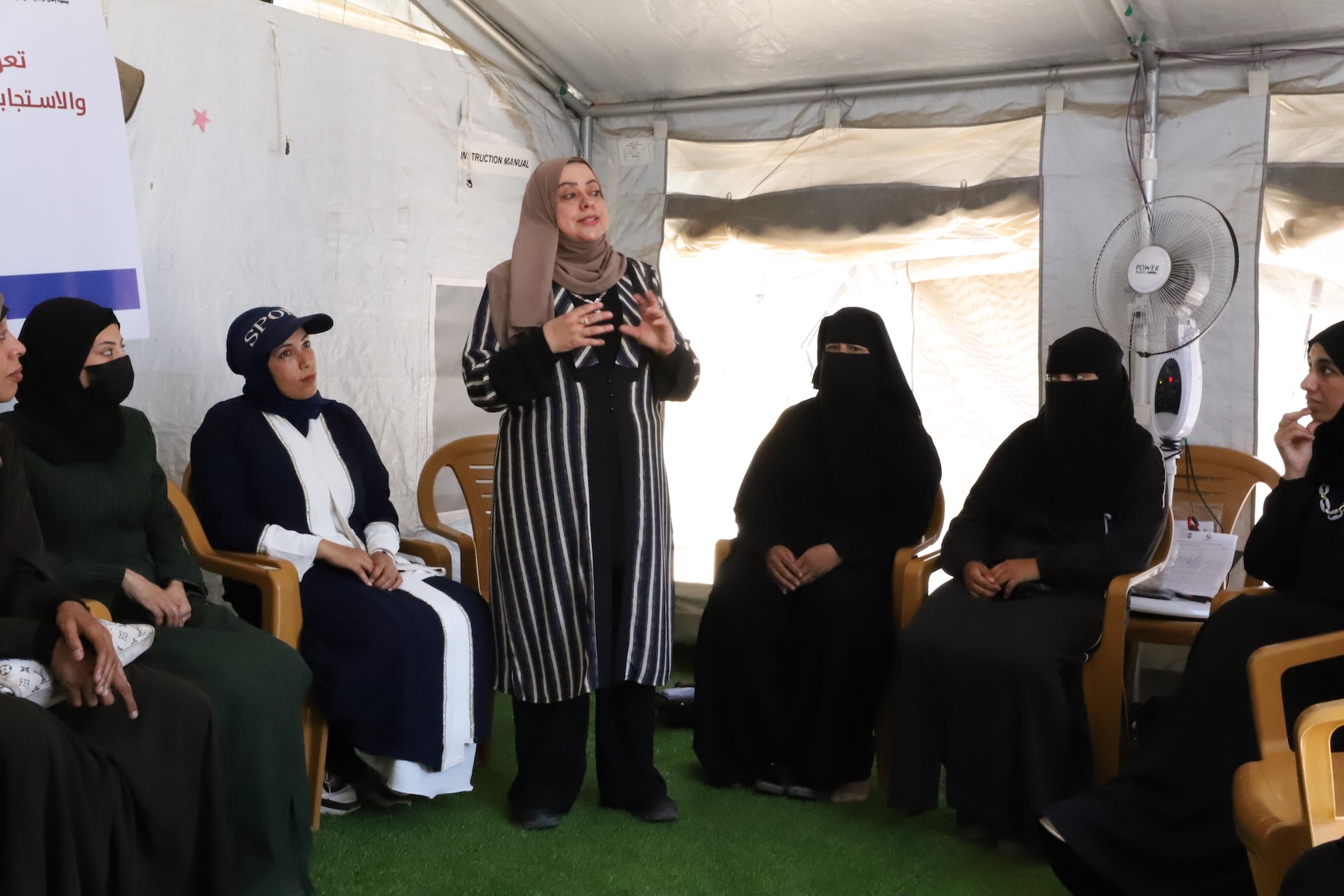
Buthaina Subeh is the director of Wefaq Society for Women and Child Care — one of ActionAid’s local partners in Gaza.
Buthaina says: “If women aren’t at the heart of humanitarian response planning, there will be no results. Only a woman can truly feel what another woman’s situation is, what her needs are, and what she requires.”
“This is a true and absolute genocidal war, in every sense of the word. It is a war against us, as human beings, an ethnic war, manifested through violations of human rights and the principles of international legitimacy that we spent years advocating for.”
“The impact on women at the beginning of the war was severe and extremely difficult. Many stories have been documented and shared by us at Wefaq, and by other organisations. The mass displacement of women and girls had a major impact. Women suffered many violations throughout their displacement. Many women had to walk the entire way, while displaced, from northern Gaza to the south. Some lost their children or their husbands along the way.”
In Gaza, this leadership happens far beyond humanitarian meeting rooms and conference halls. It happens in displacement sites and community spaces. It happens when women leaders mobilise assistance for families who have lost their livelihoods. It happens when psychosocial support is provided to someone struggling to cope, when organisations continue operating after their offices and resources have been destroyed, and when humanitarian workers themselves are experiencing displacement and loss yet continue to stand beside others.
Building a future in Gaza
“Gaza needs everything. But first, Gaza needs an end to the Israeli occupation and its reconstruction,” says Buthaina. “The most important thing it needs now is the rehabilitation of hospitals. People should be able to live a dignified, protected, and honourable life, far from the humiliation and degradation that all the people of Gaza are currently living in.”
“There is no truce. The talk of a truce is a big lie, and it seems the whole world has believed it. Here in Gaza, there is no truce. Every day there is bombing, killing, and death. At any moment, the area can be bombed while you’re walking in the street. We always say that the land of Gaza belongs to the people of Gaza. God willing, things will improve, and the future will be better.”
Buthaina and Sahar represent a wider generation of Palestinian women leaders who are shaping humanitarian response while living through the very crisis they are responding to. Their work challenges the idea that local communities are simply recipients of humanitarian aid. They are leaders, decision-makers, organisers and responders.
On World Humanitarian Day 2026, we honour Buthaina, Sahar and all the Palestinian women humanitarian workers who continue to lead with courage, dignity and solidarity.
They are not waiting for permission to lead. They are leading now. And their leadership must be at the heart of humanitarian action.
ActionAid Palestine and its partners continue to provide life-saving assistance and long-term support to women and their families in Gaza. Donate to support this work, and ensure we can scale our response to reach as many people as possible.