In any crisis, women and girls are disproportionately impacted, and this Ebola outbreak is no different. Women are more likely to be infected because they carry caring responsibilities in their homes when a family member falls sick.
But it’s not just the risk of Ebola that impacts women; misinformation within communities about what Ebola is and how it spreads means more women are afraid to set foot in health centres.
The Ebola outbreak is increasing Gender-Based Violence in the DRC
Women have reported heightened vulnerability because they are primary caregivers of sick household members, which exposes them disproportionately to infection risk with no PPE or training.
The Ebola crisis is sparking a far-reaching socioeconomic crisis that could push 985,000 more people into poverty, with women disproportionately suffering the economic and health fallout.
Gender-based violence (GBV) is widespread across the DRC. Years of conflict have displaced millions of people within the DRC, and women and girls living in displacement camps at increased risk of violence. This is a risk that’s exacerbated by the lack of support systems for survivors of violence.
When ActionAid’s team conducted a Rapid Needs Assessment ahead of preparing our Ebola emergency response, women in affected communities reported experiencing an increase in GBV risk since the outbreak began, with a 63% increase in cases in Nyankunde, 58% in Nizi, and 54% in Bunia. At the same time, fear and misinformation around the virus are creating widespread fears of health centres. This means women and girls experiencing GBV are delaying or avoiding accessing essential medical care and support – leaving many cases unreported.
Health workers are ensuring survivors of violence access the support they need in this crisis.
Hélène has been a Health Promotion Agent at a Health Centre in Ituri since May 2026, supporting women and communities during the Ebola outbreak.
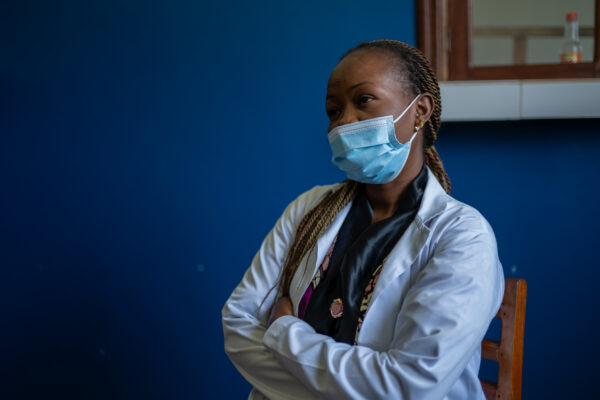
She’s noticed how fear and misinformation have dramatically changed her work, with many people avoiding health centres because they worry they will be diagnosed with Ebola. As a result, survivors of GBV are delaying or avoiding essential medical care, leaving many cases unreported.
“Since the Ebola epidemic appeared in our health zone, many things have changed, because patients are afraid to seek care at the health centre; they hide at home. During this period, we also observed that many cases of sexual violence go unreported, and that some survivors do not receive the care they need, because of fear related to Ebola virus disease.”
Despite the risks to their own health, Hélène and her colleagues continue to provide safe spaces for survivors of GBV to meet and access the care they need.
How you can support ActionAid respond to Ebola in DRC
The Ebola outbreak was declared on 15 May 2026 is now the largest ever outbreak of Ebola reported in the DRC.
Preventing the spread of infection is vital. Please make a donation today so you can support ActionAid to:
- Distribute kits and protective gear to communities to reduce the spread of infection.
- Install handwashing stations and hand sanitiser in public spaces.
- Rollout Ebola awareness and prevention training for parents and teachers.
- Set up health screening sites to monitor infection spread.