Dawasang is staying at a holding centre in Tupche, Nuwakot district, following the 26 August floods. She and her family had moved to Tupche two-and-a-half years ago hoping to build a safer life. Dawasang and her husband worked hard to establish themselves, buying a tractor, preparing farmland and gradually building up their belongings. Then the flood swept it all away.
“Everything I had gathered with so much hardship is gone. Now I have nothing left. We are receiving relief for now, but what will we do when that runs out? Who will provide for my son and daughter?” she said.
Her younger son is studying in Grade 11, while her daughter wants to continue her education after finishing Grade 12. “She keeps saying, ‘I want to study no matter what.’ All she talks about is studying. And now I’m worried about how I’m going to educate her.”
“We worked very hard to build up what we had. We bought a tractor, prepared the farmland and put in so much effort. Sometimes we worked even when we had nothing to eat. Now everything is gone.”
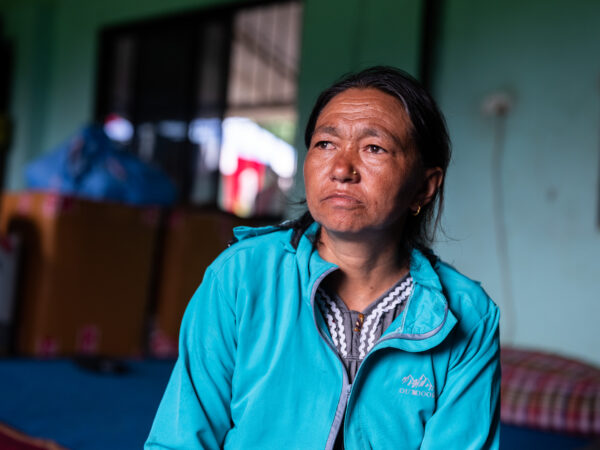
Dawasang at a holding centre in Tupche, Nepal. She lost her husband in the floods and worries about her children’s future. Photo: Uma Bista/ ActionAid
The 26 August disaster devastated communities along the Bhotekoshi and Trishuli river systems, destroying homes, farmland, roads, bridges, hydropower facilities and livelihoods. Nearly three weeks after the floods, at least 1,386 people have been confirmed dead, and 5,130 remain missing.
In Nuwakot, homes and farmland have been destroyed, riverbanks devastated and residents in Trishuli Bazar are clearing debris as communities begin the long process of recovery. With bridges across the Trishuli River damaged, some communities are relying on a Tuin – a cage suspended from a makeshift zip line – as a vital means of crossing the river.
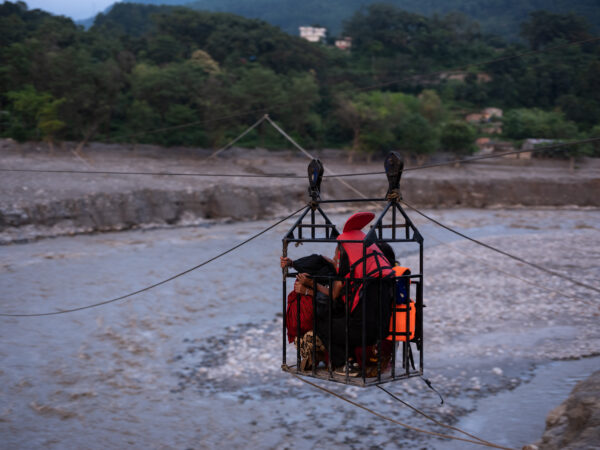
People cross the Trishuli River in a Tuin the only way possible, a cage suspended from a makeshift zip line, in Nuwakot district. Floods damaged bridges connecting Trishuli Bazar and Bidur. Photo: Uma Bista/ActionAid
Sujeeta Mathema, Executive Director of ActionAid Nepal, travelled from Kathmandu to Tupche to meet affected communities and help distribute emergency assistance. The journey, which would normally take around two to two-and-a-half hours, took approximately seven-and-a-half hours because of the condition of the roads.
“When we spoke with people in the community, they could barely express their pain,” Sujeeta shared. “They don’t know what to do or how to move forward. Some have gone to perform funeral rites, while others are still searching for people who are missing. They don’t even know whether some of their loved ones are dead or alive. ”
“This entire area used to be a settlement. Now it looks empty. I don’t even know what is underneath where I am standing.”
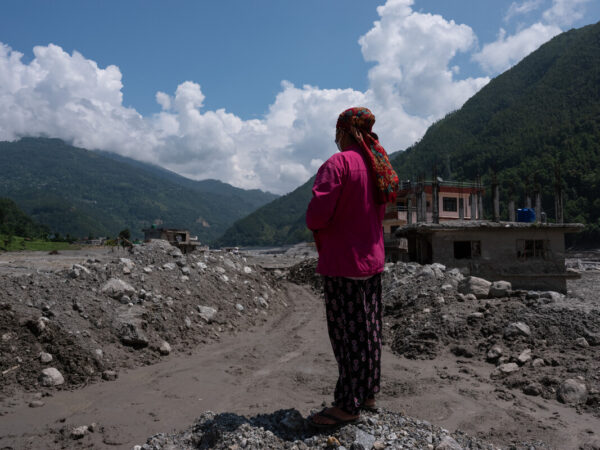
Durga looks over what remains of her farmland in Tupche, Nuwakot, Nepal. Her home was destroyed and livestock lost in the floods, forcing her family to shelter with a neighbour. Photo: Uma Bista/ ActionAid
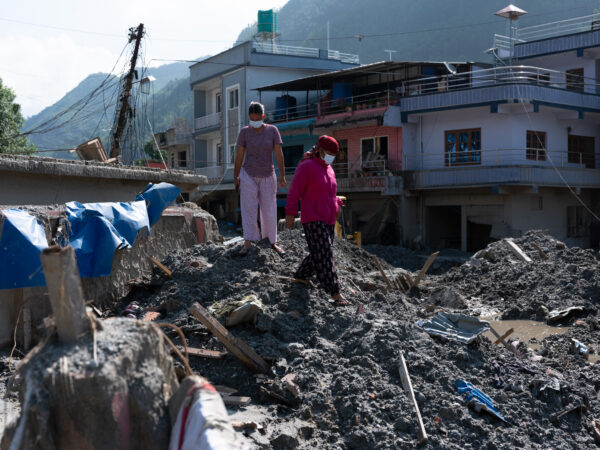
Durga and her daughter survey the damage to their home in Tupche, Nuwakot, Nepal. Photo: Uma Bista/ ActionAid
ActionAid Nepal is providing emergency assistance to affected families. At Pioneer School in Tupche, the organisation has distributed dignity and hygiene kits, men’s essentials, kitchen utensils, mattresses and blankets.
But Sujeeta warned that the longer-term challenge is only beginning.
“The immediate need here is massive. We can respond to some of those immediate needs now, but what long-term recovery will look like is still uncertain,” she said. “People are staying in holding centres, schools or temporarily in other people’s homes. They will need temporary shelter, support to get children learning again and psychosocial support.”
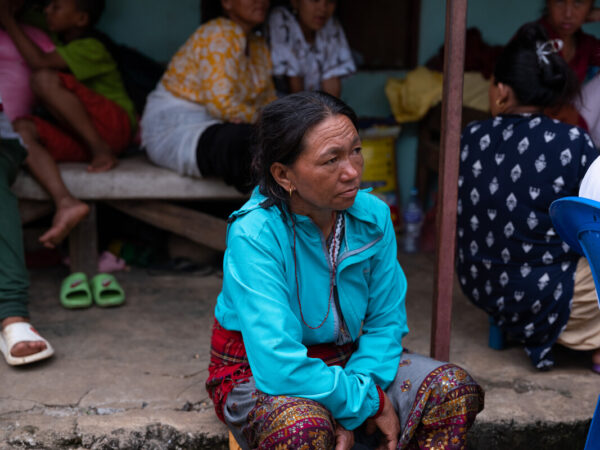
Dawasang at a holding centre in Tupche, Nuwakot. She worries about how she will pay for her daughter’s education. Photo: Uma Bista/ ActionAid
Dawasang received cooking equipment, bedding, clothing and hygiene items through ActionAid’s distribution. But her greatest concern is what happens to her children in the months and years ahead.
“If something happens to me, I worry about my younger son and daughter,” she said. “If someone could secure their future in some way, I would feel much more at ease. I still hope that someone might help them.”
The disaster appears to have been triggered by a major collapse of glacier ice, rock and bedrock, setting off a cascading flood and debris flow through the Bhotekoshi and Trishuli river systems. Scientists are still establishing the precise sequence of events, including the role of glacial and temporarily dammed water.
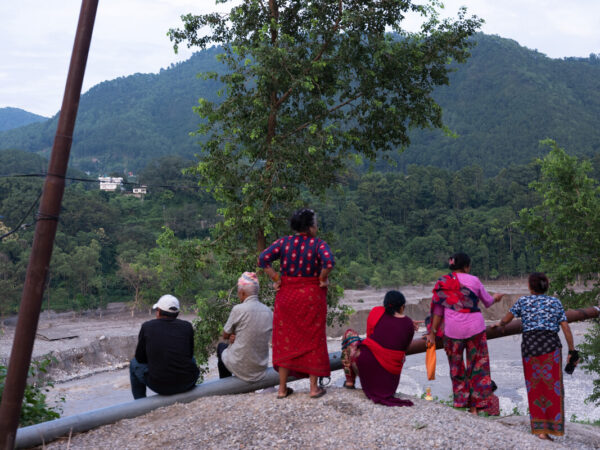
People gather beside the flood-hit Trishuli River in Trishuli Bazar, Nuwakot. Photo: Uma Bista/ ActionAid
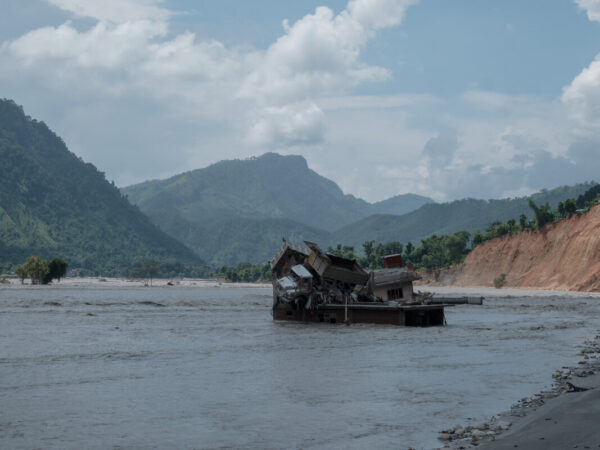
Trishuli Bazar in Nuwakot, one of the areas worst affected by the 26 August floods. Photo: Uma Bista/ ActionAid
Sujeeta said the devastation should also force the international community to confront the wider injustice faced by countries such as Nepal, which have contributed little to global greenhouse gas emissions but face severe and escalating climate risks.
“Nepal is suffering, but why are we paying this price? We are paying the price of global warming and climate injustice, despite contributing so little to causing this crisis.”
“The world may now present Nepal as a case study. But what is happening here is also a warning to the world. If we do not act together for climate justice, disasters like this will not remain confined to Nepal.”
Funding is urgently needed to help scale up our emergency response and reach people impacted by the devastating floods. Please donate today to help communities in Nepal get the urgent support they need.