ActionAid colleagues across Africa and Asia report that fuel prices have risen sharply since the conflict began, with severe knock-on effects for transport, food costs and livelihoods:
- In Somaliland, the price of petrol rose from $0.78 per litre to a peak of $1.3 per litre (+67%) and is currently holding at around $1.15 per litre (+47%)
- In Nepal, the cost of petrol increased by around 40%, while the cost of diesel – the primary fuel used for public transport – increased by more than 70% at its peak
- In Zimbabwe, petrol and diesel costs have gone up 35-43% since February
- In Malawi, fuel prices have risen by 35% since the start of the war
- In Cambodia, petrol has increased by around 40% and diesel by more than 60%, while the country has also experienced temporary fuel supply disruptions, with thousands of petrol stations suspending sales and hundreds remaining closed due to shortages and delays in new supplies
Across Africa and Asia, rising fuel costs are pushing up the price of almost everything people rely on to survive. Colleagues report families skipping meals to afford transport, withdrawing daughters from school, reducing travel to health clinics and cutting back food production as the cost of farming becomes increasingly unaffordable. People are already having to resort to extreme coping strategies, colleagues warn, such as skipping meals or pulling their daughters out of school to afford their transport to work. In rural communities, farmers are being forced to limit food production due to soaring costs, with worrying implications for future yields and food security.
One of the most direct consequences has been a sharp rise in the price of public transport, which many low-income workers depend on to reach their place of work, or else to reach markets, health clinics or schools.
- In Somaliland, the local bus fare has increased by 50% from 2,000 to 3,000 Somali shillings
- In Zimbabwe, kombi and bus fares have jumped by 50 to 100 percent since March 2026, meaning many can no longer afford trips to clinics, markets, or schools
“For many low-income households, higher fuel prices are translating directly into hunger, lost income and interrupted education,” said Dr. Selina Pasirayi, country director of ActionAid Zimbabwe. “A 40 percent increase in fuel prices can mean a girl missing school, a woman skipping meals, or a farmer struggling to produce enough food.
“The war on Iran did not create these inequalities, but it has deepened long-standing vulnerabilities rooted in colonial land inequality, patriarchal care burdens and dependence on imported fuel.”
With no resolution to the conflict yet in sight, ActionAid fears the impacts will continue to deepen, particularly for women and low-income families already facing multiple overlapping crises. Rising fuel costs are compounding the effects of inflation, debt and the looming threat of El Niño, which is expected to bring further climate-related shocks to many vulnerable communities.
Anish Raj Shrestha, communications manager at ActionAid International Nepal, said: “Global crises should not force vulnerable communities to pay the highest price. This moment highlights the urgent need for stronger social protections, fair economic policies, investment in local food systems, and climate resilient livelihoods that protect people during these kinds of global shocks.”
For women on the precipise of the crisis, the consequences are already stark. Across Africa and Asia, families describe cutting back on food, abandoning business plans, reducing cultivation and struggling to keep children in school as the cost of everyday life rises.
Somaliland
Farmers in Somaliland are already confronted with some of the fiercest impacts of the climate crisis year in year out – from prolonged drought and extreme heat to erratic flooding.
Now, rising fuel prices are adding further disruption, driving up the costs of everything from operating water pumps to transporting produce and acquiring seeds; hampering the amount of food they can produce.
Saynab Dahir Mohamoud, a farmer in Togdheer Region, Somaliland, said: “Fuel costs have skyrocketed for us…The expenses of the farm, whether for labor, fuel, or equipment have risen drastically. Because of this, instead of the two hectares we used to cultivate before, today, we are forced to farm just half a hectare in order to sustain ourselves and our families. When it comes to [selling our produce], we are hindered by poor roads and the increased cost of fuel for vehicles, which has doubled our expenses.”
She said women were particularly feeling strain, adding: “As women, our workload both at home and on the farm is immense. While busy with the fields, we are also managing our children, [their] education, cooking and other household chores, which has put a heavy burden on us.”
Mohamed Sillah, Country Director of ActionAid International Somaliland, said people were already being pushed into negative coping strategies.
“People are already reducing food portions and shifting to cheaper food, because their earning power has been affected,” he said. “As Somaliland is a country that highly depends on imported goods, particularly through the regional supply chain linked to the Gulf, the ongoing tension has affected food availability, transportation costs, field prices, and the general cost of living. A five litre cooking oil container increased from around $7 to $9, while some imported foods are even out of stock…Drinking water costs have increased in Somaliland by 10% for a 200 litre water barrel that people used to buy in their houses.”
Thailand
Thailand In rural communities in Thailand, where many people are dependent on their own vehicles as their only means of getting to work, the frequent disruptions to fuel supplies and soaring prices have caused deep uncertainty and stress.
Rattana Buedang, a primary schoolteacher in Ratchaburi Province in central Thailand, said:
“Teachers have been badly affected because everyone drives to work from home… Before, during normal times, we knew we could refuel as soon as the warning lights came on. But during the crisis…even if the fuel in our cars was only a little less than half a tank, we had to try to find a way to refuel because we didn’t know what the future held.
“It even got to the point where teachers at the school helped each other out. If we saw a fuel truck pass, we would take turns going to refuel at the nearest gas station. One of us would take over another’s class for a while because they had gone to queue up to fill the tank.”
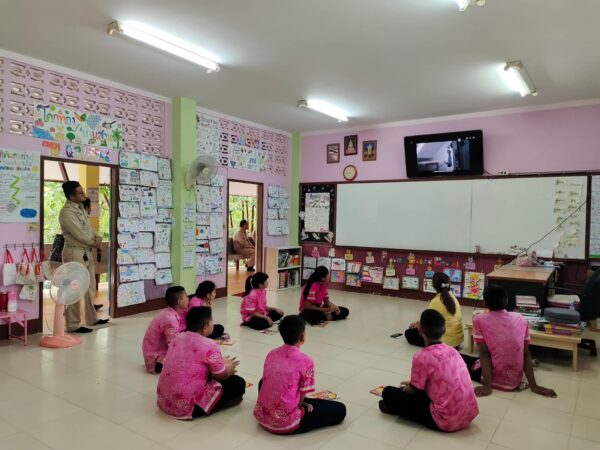
Students at a small primary school in Ratchaburi Province, central Thailand.
Meanwhile, the rising prices of everyday essentials was putting both the school and students’ families under mounting pressure, she said.
Rattana continued: “The prices of essential goods are increasing. For us, the increased costs are mainly for school lunch ingredients…The allocated budget for our school has remained the same, but everything has gone up in price – cooking gas, vegetables, pork, seasonings – everything. This will definitely have a big impact on the children.
“I worry for the parents and their expenses. Other teachers have told me that during the school break, some parents called, some came crying, sharing all sorts of hardships in daily life. They needed to withdraw their children’s savings that they had deposited with the teachers. The school has a savings program for the children to use for necessary purchases or other expenses, like field trips.”
Phannee Phunkhao, a member of Ban Sai Thong Community in southern Thailand’s Phang Nga Province, said: “Because most people in my community are farmers, fuel has become a necessity whether we’re out driving for errands or working on our farms. Hiring a riding mower to prepare the soil used to be around 10,000 Thai baht [£228], but now it’s 15,000 Thai baht [£343]. The mower says it’s because of the high gas price. That’s the impact we have to bear. It’s hard to control our expenses. We also need gas to pump water into our home.”
She said the uncertainty provoked by the war had pushed her and others in her community to try and become more self-sufficient. She said: “Everyone in our community is stressed. In my household, we’ve realized we need to be more cautious with our spending…we don’t know what the future holds. If there’s a war, who knows what else will happen. So, we need to prepare ourselves. My family has started to grow our own vegetables and medicinal herbs so that if something happens, we can take care of ourselves, have food and medicine. Many people in our village are thinking about this. We only buy what’s necessary, things we can’t produce ourselves.”
Nepal
Relatives and friends of the millions of Nepali workers employed across Gulf countries have been doubly affected: forced to contend with rising prices at home in Nepal while also living in fear for the safety of loved ones abroad.
Renu Chaudhary, secretary of a youth group in Shivaraj Municipality, in southern Nepal, said her brother moved to Dubai to improve the financial situation of the family, who are farmers.
She said: “We were hopeful when he went there but only after a month, a war brokeout, which was unexpected for all of us. It was a really difficult situation for my brother. When the war was happening, he couldn’t go out of his room. He stayed hungry in his room for one or two days. He was in a terrible condition then.
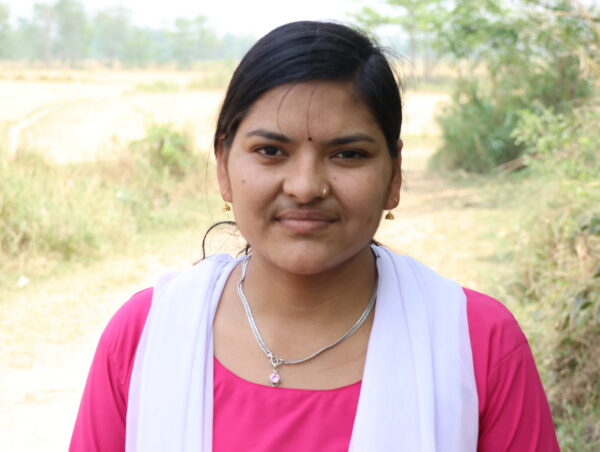
Renu Chaudhary is secretary of a youth group in Shivaraj Municipality
“My parents were extremely worried due to my brother’s situation because of the war. My brother’s life is more important than money. Money can always be earned, but I only have one brother.”
Meanwhile at home the cost of living has risen sharply while wages remain the same, according to Sanjila Kumal, co-secretary of the Shanti Shramik Women’s Group in Shivaraj Municipality. “Sometimes transportation costs can be nearly a third of what we earn in a day. The cost of daily essentials like cooking oil and cooking gas has sharply increased, and it has become expensive to even attend hospital appointments and take care of [our health].”
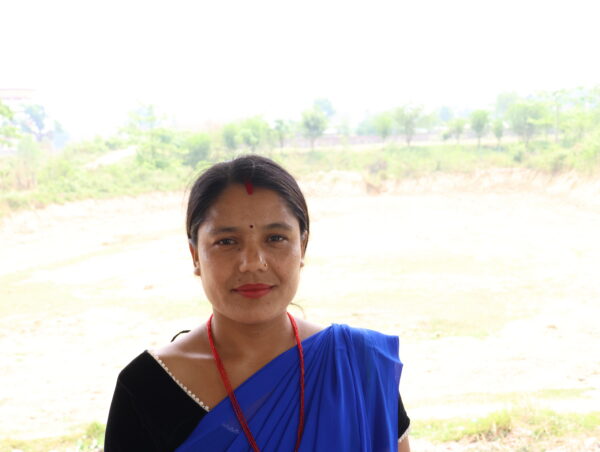
Sanjila Kumal is co-secretary of the Shanti Shramik Women’s Group, Shivaraj Municipality, southern Nepal.
Anish Raj Shrestha, communications manager at ActionAid International Nepal, said: “What we are witnessing today is that a global conflict, far away from Nepal, is already affecting the daily lives of ordinary people here, especially women, informal workers, smallholder farmers, and low-income families.’
“Rising fuel prices are not only an economic issue here, they’re [also] becoming more of a justice issue, affecting food security, livelihood, mobility, impacting healthcare and ultimately the dignity of the people. For many families already struggling with inflation and low incomes, daily survival is becoming more difficult. While Nepal may not yet be seeing an immediate food security crisis, rising food prices are already forcing people living in poverty to compromise on other essential daily needs. If this situation continues, it is always the end consumers, especially low-income households, who will bear the greatest burden, spending a larger portion of their income just to survive.“
Zimbabwe
Virgina Gonzo, who runs a grocery shop in Nyazura, eastern Zimbabwe, is worried about the future of her business if the situation does not improve.
“What worries me most is that if things continue like this and prices keep rising, I might be forced to close my shop,” she said. That shop is my only source of income.”
“The rising costs have affected my family directly. We rely on public transport to order stock, and since fuel prices started rising, transport costs have become very high. Yet our profits are now smaller. Business is slow, and it has become difficult to raise money for my children’s school fees. I am stressed because schools are about to open and I do not know how I will manage to pay.
“People in Nedziva sometimes do not understand why I have also increased my prices, and this is greatly affecting the business that supports my livelihood.”
Dr Selina Pasirayi, Country Director of ActionAid Zimbabwe, said the consequences were already being felt in households across the region: “Transport fares doubling means some of the poorest households are skipping meals to afford travel, while women often eat less so children can eat. People are walking longer distances, skipping meals and reducing travel as prices rise. Some families are withdrawing girls from school to save transport costs, while women are spending more time collecting firewood as LPG and paraffin prices increase.
“‘Rural women face a 60 percent global surge in urea fertilizer costs and a projected 31 percent increase in overall fertilizer costs. As women make up the majority of Zimbabwe’s smallholder farmers but often have the least access to credit and financial support, many are being forced to reduce planting, which threatens future harvests and incomes. This is why ActionAid promotes agroecology, as it enables farmers to adopt more sustainable and resilient farming practices that are less dependent on synthetic fertilisers.’
Malawi
Tendai Nkhoma, a 27-year-old who runs a small shoe shop in Kapiri, Malawi, fears soaring prices could push her into debt.
She said: “This fuel crisis has turned everything upside down, as everything is now more expensive than before.’
“For my business, transport costs have increased, so bringing in stock is more expensive. I now order fewer shoes at a time, which means I sometimes run out of popular stock. Recently I had a supplier ready to send me a batch of shoes from Tanzania, but transport cost had doubled from K90,000 [US$50] to K180,000 [US$100] per batch. I couldn’t afford it at the time, so I had to cancel the order.
“At home we have cut down on certain foods and try to buy cheaper alternatives. Sometimes we even skip meals just to save for the next day’s meals.
“Some days I don’t make enough to cover daily expenses; it’s stressful because I depend on this business and I have had to put aside plans to expand. Women who run small business like me usually don’t have savings or access to loans to cushion them from shocks.
“I worry that I might have to close my business completely if things don’t improve. If I can’t afford stock that even customers can’t afford to buy, there’s no way to continue. I fear the possibility of falling into debt just to survive.”
[ENDS]
Spokespeople are available for comment.
Please contact – Steph Wulf, Senior Communications Manager, ActionAid Australia
+61 (0)456 952 836