ActionAid Australia is one of 57 NGOs that joined with voices from Australia’s Nepali, Tibetan and South Asian communities today in Canberra to demand the Australian Government stop approving new fossil fuel projects, pay its fair share of climate finance and end all fossil fuel subsidies.
“Nepal and Tibet have experienced a catastrophic flash flood, and as a polluting country Australia can’t pretend it has nothing to do with us,” says ActionAid Australia Executive Director Michelle Higelin.
“That’s why we’re calling on the Australian Government to take these urgent climate actions, because communities should not be forced to foot the bill for a climate crisis they did little to create. COP31 is in a few months – Australia can’t call itself a climate leader on the world stage while approving more coal and gas projects and pushing developing countries further into debt that they cannot recover from.”
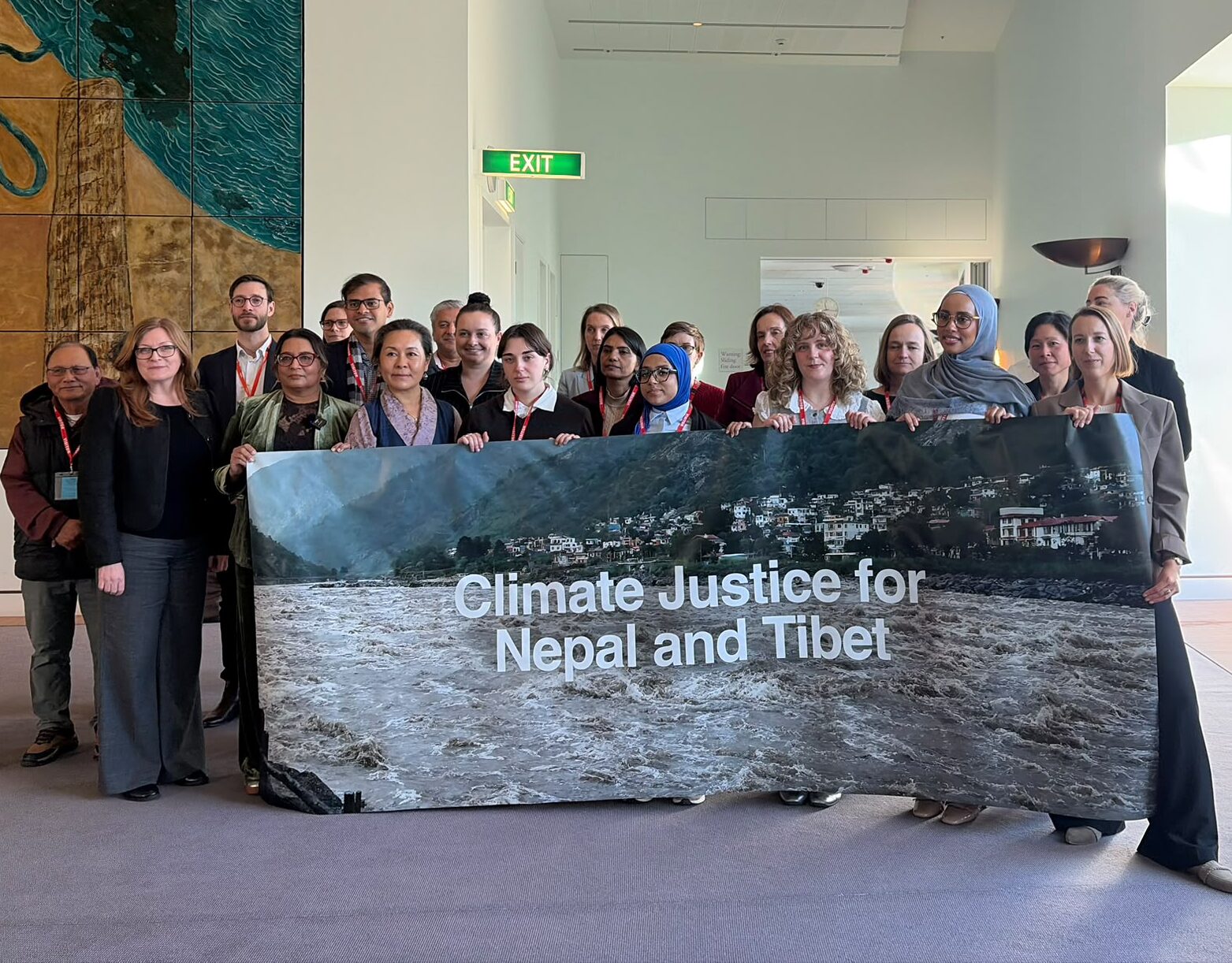
NGOs and Nepali and Tibetan community voices joined Senator Mehreen Faruqi at Parliament House in Canberra, to call on the government to take climate action.
Forced to pay for a crisis it did not create
In a joint open letter, the coalition of NGOs and community voices asks the Government to urgently stop approving new fossil fuel projects which are driving climate change, such as Whitehaven Coal’s Winchester South (half a billion tonnes of carbon pollution), Glencore’s Hunter Valley Operations continuation project (800 million tonnes), Woodside’s Browse gas project (1.6 billion tonnes) and the Beetaloo basin.
It also asks the Government to commit to paying its fair share of climate finance for developing countries such as Nepal so they aren’t left with billions of dollars in debt from the disaster, and to end all fossil fuel subsidies and make big polluters pay for their climate damage.
The Australian Government provides around $14.5 billion in fossil fuel subsidies per year – in comparison, it only provides around $1.3 billion to support climate adaptation, mitigation and loss and damage responses in our region and globally.
Dr Radha Wagle, a member of the Nepalese Association of Agriculture, Forestry and Environment in Australia, highlights that climate disasters are impacting communities who didn’t create the problem. “As a small and vulnerable country in the world’s Third Pole, Nepal, including other mountainous countries, is facing the harshest impacts of a crisis they did not create. Nepal and the impacted countries need justifiable compensation from the wealthy countries and big emitters, not just humanitarian relief, so they can recover, rebuild and adapt with dignity,” she said.
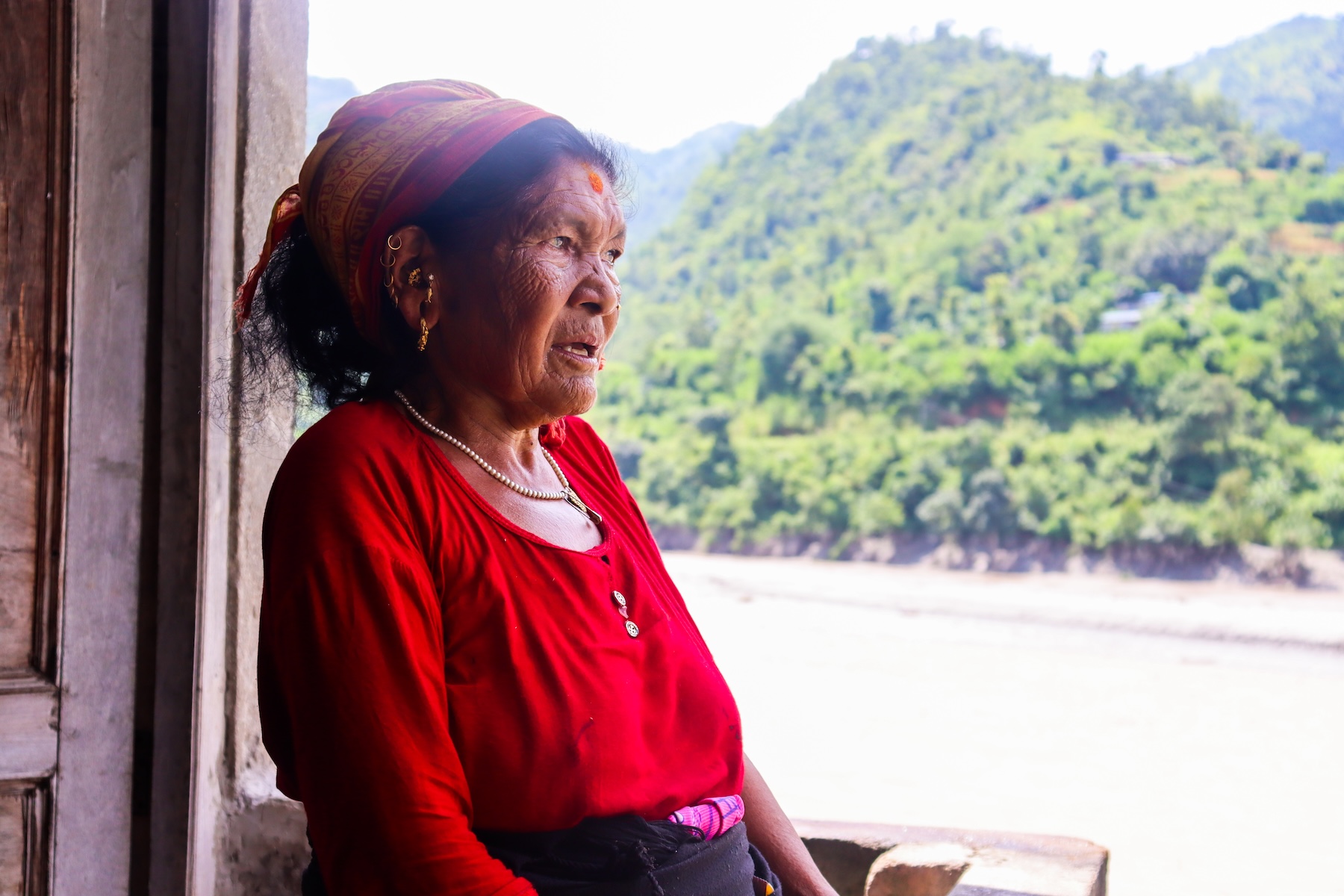
After floods in Nepal buried her farmland, Nanimaya faces a long road to recovery. Image – ActionAid
And it’s not just communities in South Asia, but also diaspora communities in Australia, who are feeling the impact.
Dr. Ruchira Talukdar, Director of Sapna South Asian Climate Solidarity, says that Australia has a responsibility to act. “In the absence of adequate climate finance from wealthy countries like Australia, migrant diasporas such as from Nepal do the heavy lifting on making funds for post-disaster recovery possible. Nepalese and other South Asians together make up Australia’s largest migrant group, sending increasing amounts of remittances for supporting communities as climate disasters recur across South Asia.”
Communities left in the dark on flood impact in Tibet
While there is extensive media coverage on the impact on communities in Nepal, it’s still not clear what the full impact has been in Tibet.
“This disaster is a stark reminder that what happens in Tibet does not stay in Tibet,” says Kyinzom Dhongdue, a Tibetan human rights advocate and Strategy and Advocacy Manager at Amnesty International Australia.
“As the source of many of Asia’s great rivers, sustaining around 1.4 billion people downstream, what happens to its glaciers, rivers and fragile ecosystems has consequences far beyond Tibet. Yet while we saw heartbreaking images from Nepal, Tibetans have been left in the dark about what happened across the border in Chinese-occupied Tibet.”
“This lack of access is not only a human rights concern – it makes it harder for the world to respond to climate change unfolding across the Himalayas. And at the very moment people in Nepal and Tibet were facing this tragedy, Australia was approving a 30-year extension of a coal mine. Every new coal and gas project adds to a climate crisis that is already putting people’s rights to life, health, housing and security at risk. Australia must put people before fossil fuel profits and phase out coal and gas, including exports.”
Climate action in Australia urgently needed across the world
Greens Senator Mehreen Faruqi, who joined the announcement at Parliament House today, was clear that Australia has a responsibility to act on climate for the sake of communities on the frontlines of climate disasters around the world.
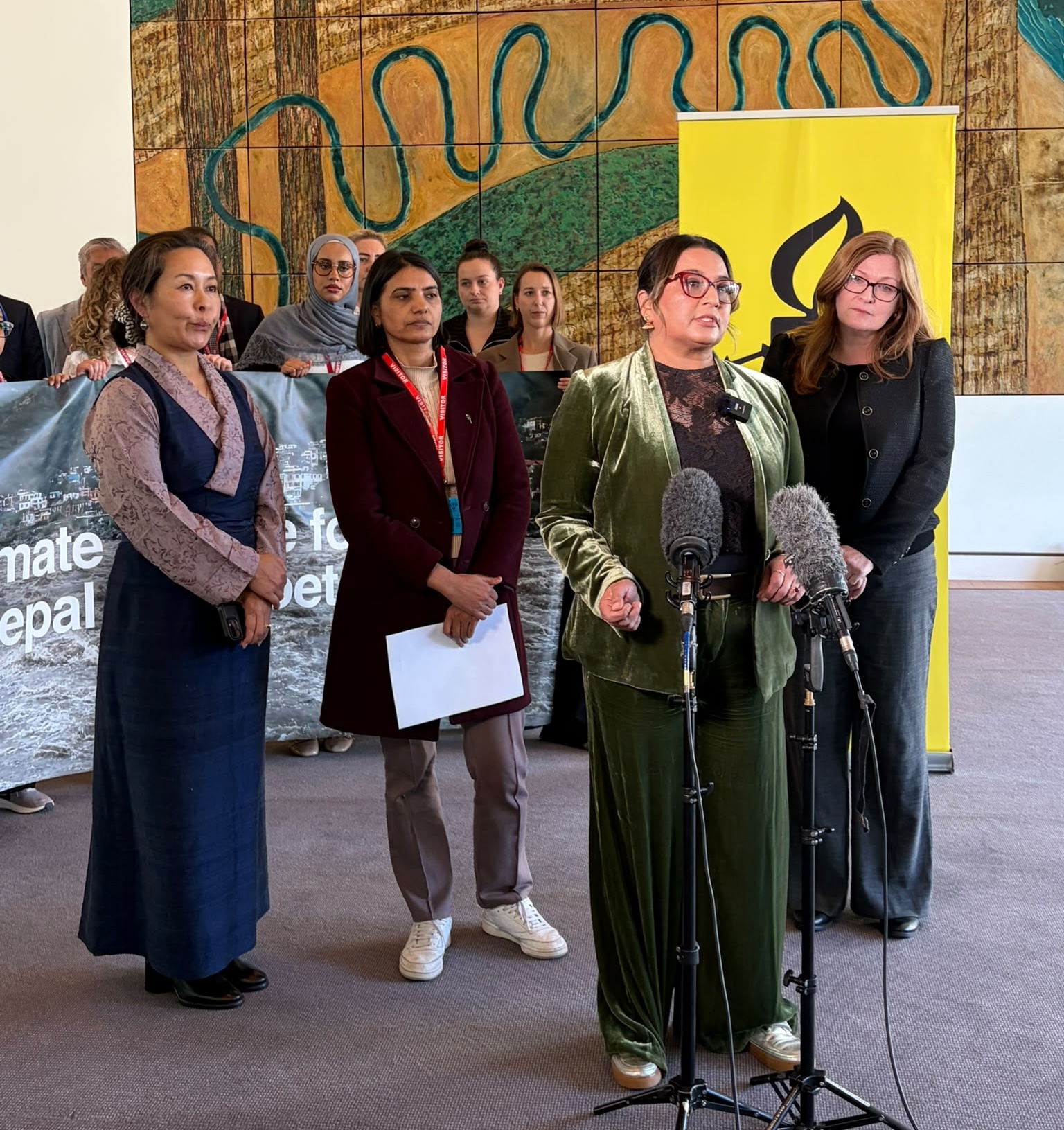
Kyinzom Dhongdue, Dr Radha Wagle, Senator Mehreen Faruqi and Michelle Higelin addressed the media at Parliament, calling for Australia to take urgent climate action.
“The Global North’s insatiable greed for digging up and burning coal, oil, and gas is resulting in climate catastrophe after climate catastrophe, with the Global South bearing the brunt of these climate disasters,” she said. “As one of the largest exporters of fossil fuels, Australia has a responsibility to take strong action on climate and support those bearing the worst consequences.”
“The PM must choose people and the planet over fossil fuel profits.”
We’re building a movement of Australians who are holding big polluters to account, campaigning for governments to fund climate solutions, and getting behind women around the world who are leading climate action in their communities. Join us, and help power change.